
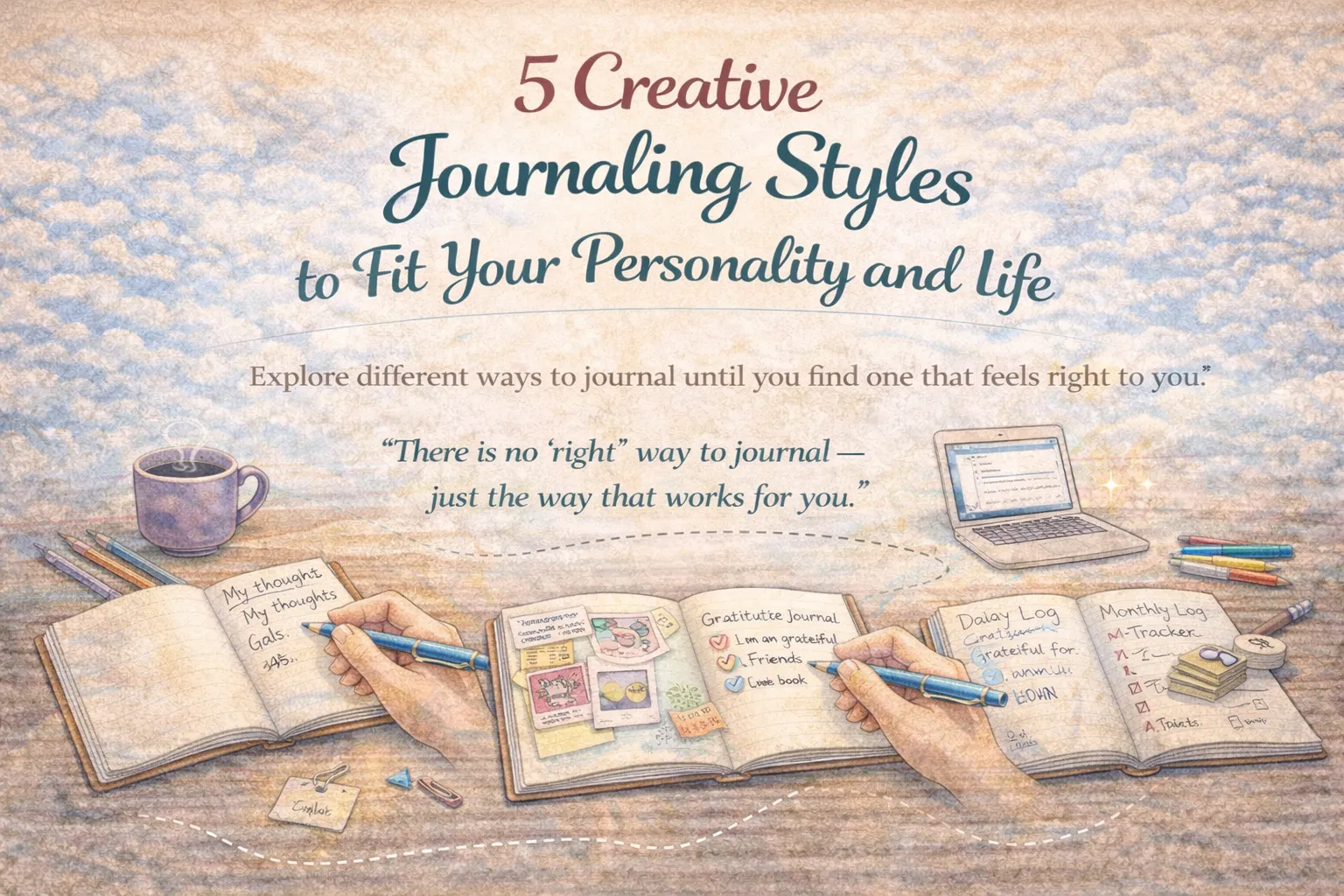
If you’re new to journaling, one thing becomes clear pretty quickly: there’s no single “right” way to do it. Journaling isn’t a one-size-fits-all habit, and it definitely isn’t limited to a locked diary and neat paragraphs.
Today, journaling can be creative, practical, reflective, or all three. It can help you organize your life, process emotions, boost productivity, or explore what you actually want. The key is choosing a style that fits you, not forcing yourself into one that doesn’t.
Here are five creative journaling styles to explore as you find your rhythm.
1. Written Journaling
This is the style most people think of first—and for good reason. Written journaling is incredibly flexible. It can hold daily to-do lists, grocery notes, long reflections, big goals, or stream-of-consciousness thoughts.
Some people use written journaling to spark creativity in the morning. Others use it to clear their mind at night. If you want a simple, adaptable place to organize your thoughts and reflect on your life, written journaling is an excellent place to start.
2. Art or Scrapbook Journaling
Journaling doesn’t have to rely on words alone. Art journaling allows you to express thoughts and emotions visually through sketches, painting, color, and texture.
If drawing isn’t your thing, scrapbook-style journaling is another option. Stickers, photos, ticket stubs, notes, and small keepsakes can all tell a story. This style is especially appealing for visual thinkers who process emotions through images rather than sentences.
3. Gratitude Journaling
Gratitude journaling focuses on noticing what’s already going right. By writing down moments, people, or experiences you’re thankful for, you gently shift attention away from stress and toward appreciation.
This style doesn’t require long entries. Even a short daily list can help improve perspective, reduce stress, and encourage mindfulness. Over time, gratitude journaling can create a quieter, steadier sense of optimism in everyday life.
4. Digital Journaling
Journaling doesn’t have to live on paper. Digital journaling offers the same benefits with added convenience. Writing on a phone, tablet, or computer can make journaling easier to access—especially for busy schedules.
Many digital journals include reminders, prompts, and easy organization, which can help build consistency. If you enjoy structure, portability, or typing over handwriting, digital journaling may fit naturally into your routine.
5. Bullet Journaling
Bullet journaling blends organization with reflection. It uses a simple system of logs and lists to track tasks, goals, habits, and ideas in one place.
This style allows you to combine planning with mindfulness—brain dumps alongside goal-setting, gratitude pages next to weekly plans. While it takes some time to learn the system, many people find that bullet journaling helps clarify priorities and create intentional structure in their days.
Journaling has grown far beyond pen and paper alone. With so many styles available, you don’t have to force yourself into a method that doesn’t fit. Try one. Mix a few. Adjust as you go.
The best journaling style is the one that works with your personality, your life, and the season you’re in right now.
Leave a Reply